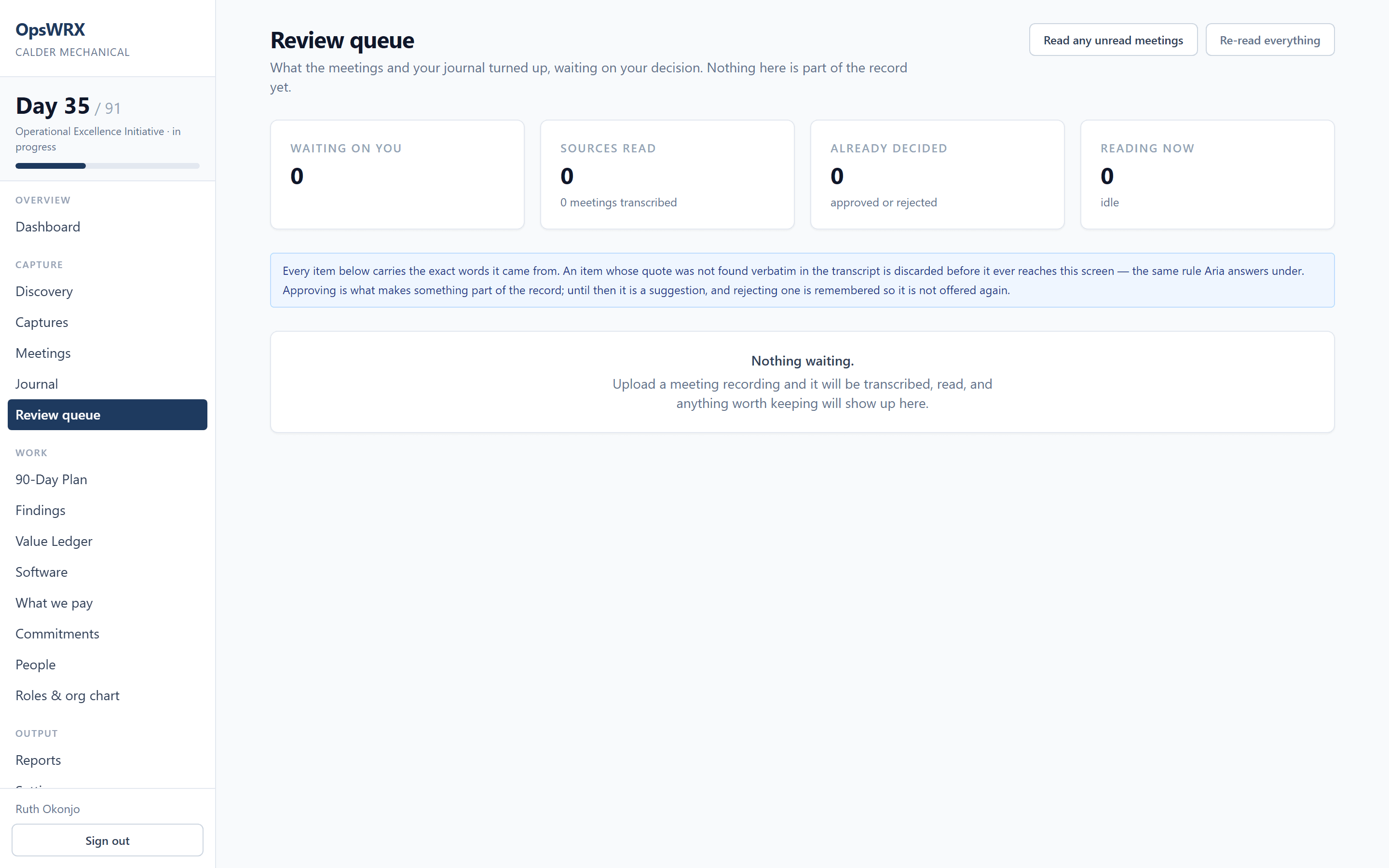
The software holds the evidence
It is not a project tracker with an assessment tab bolted on. Work connects to a diagnosed need, an intended outcome, and something that verifies it actually held.
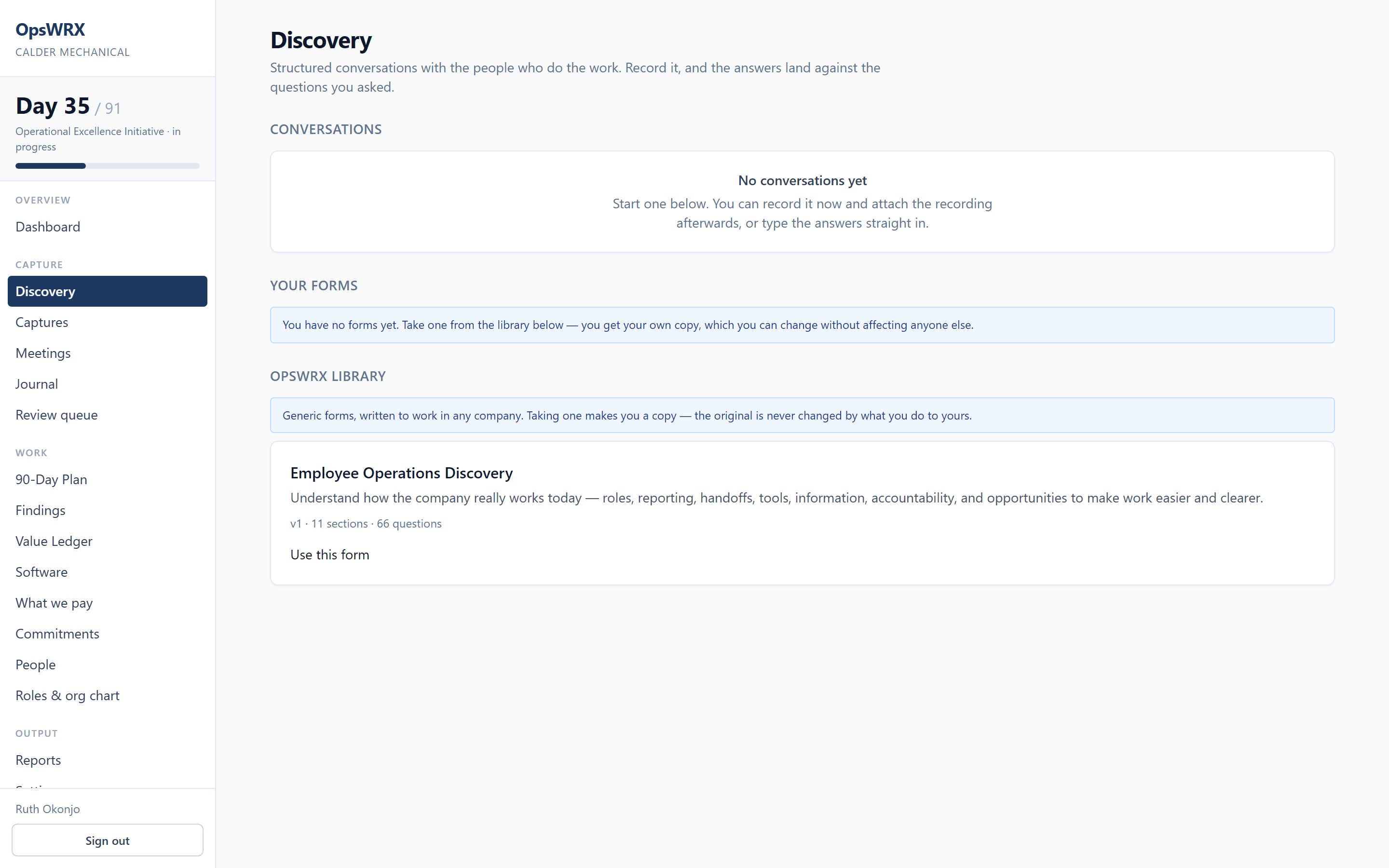
Structured conversations
A question set you can take into the room, and a recording that fills it in afterwards. Answers land against the questions you actually asked.
Every answer from a recording carries the words that produced it, checked against the transcript. An answer that cannot point at where it came from is discarded rather than kept as a plausible paraphrase.
Your own observations are kept separate from what the employee said, structurally, because an observation filed as a quotation is one nobody can withdraw.
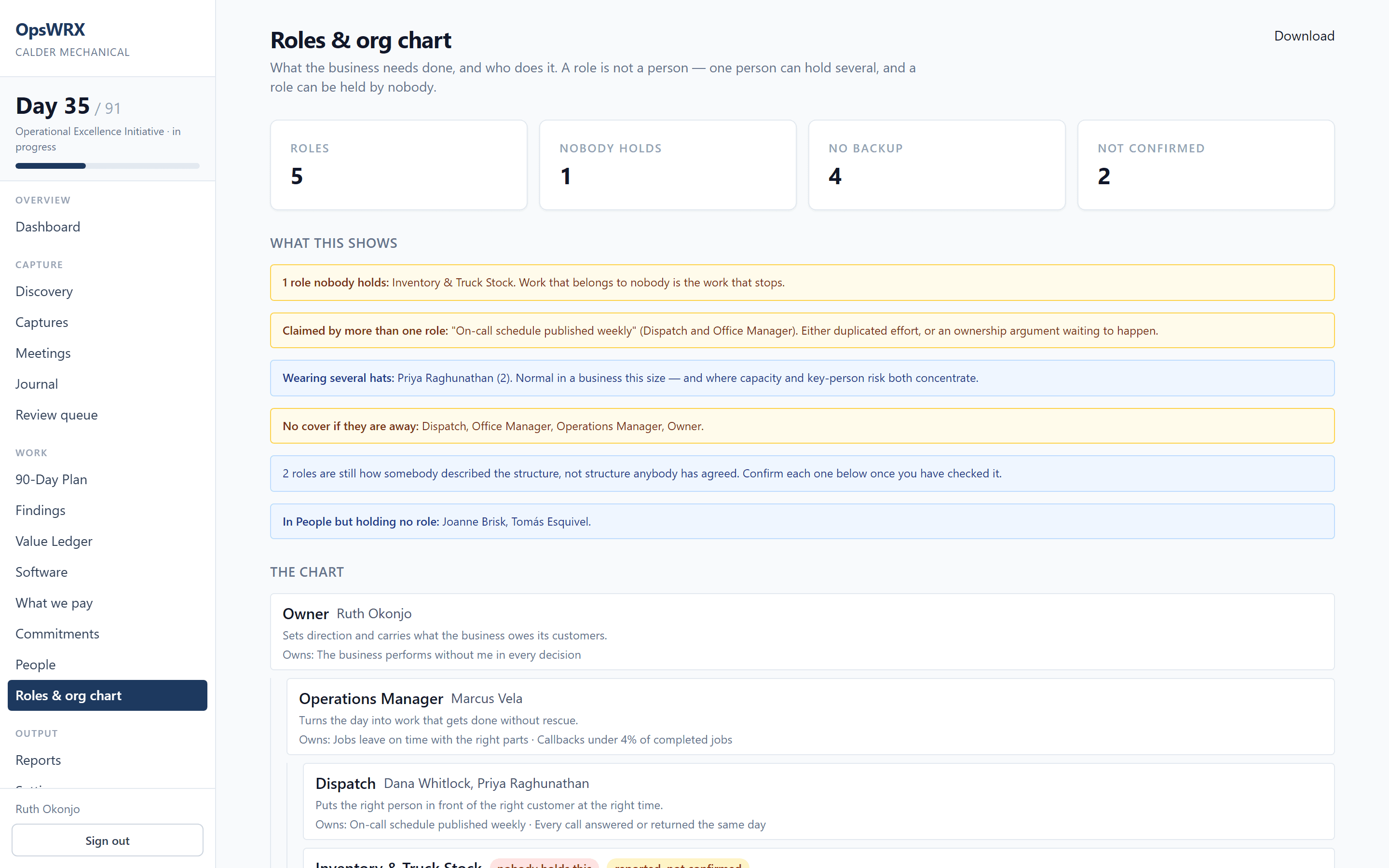
Roles, not just people
A role is modelled separately from the person filling it. In a small business one person wears several hats, and a chart drawn from people shows one box per human, which hides both the duplication and the gap.
So the chart leads with what it is for: outcomes nobody owns, outcomes two roles both claim, people carrying several roles, and roles with nobody able to cover them.
While interviews are still running, structure stays marked as reported rather than agreed. Presenting one person’s account as fact is how hearsay becomes a finding.
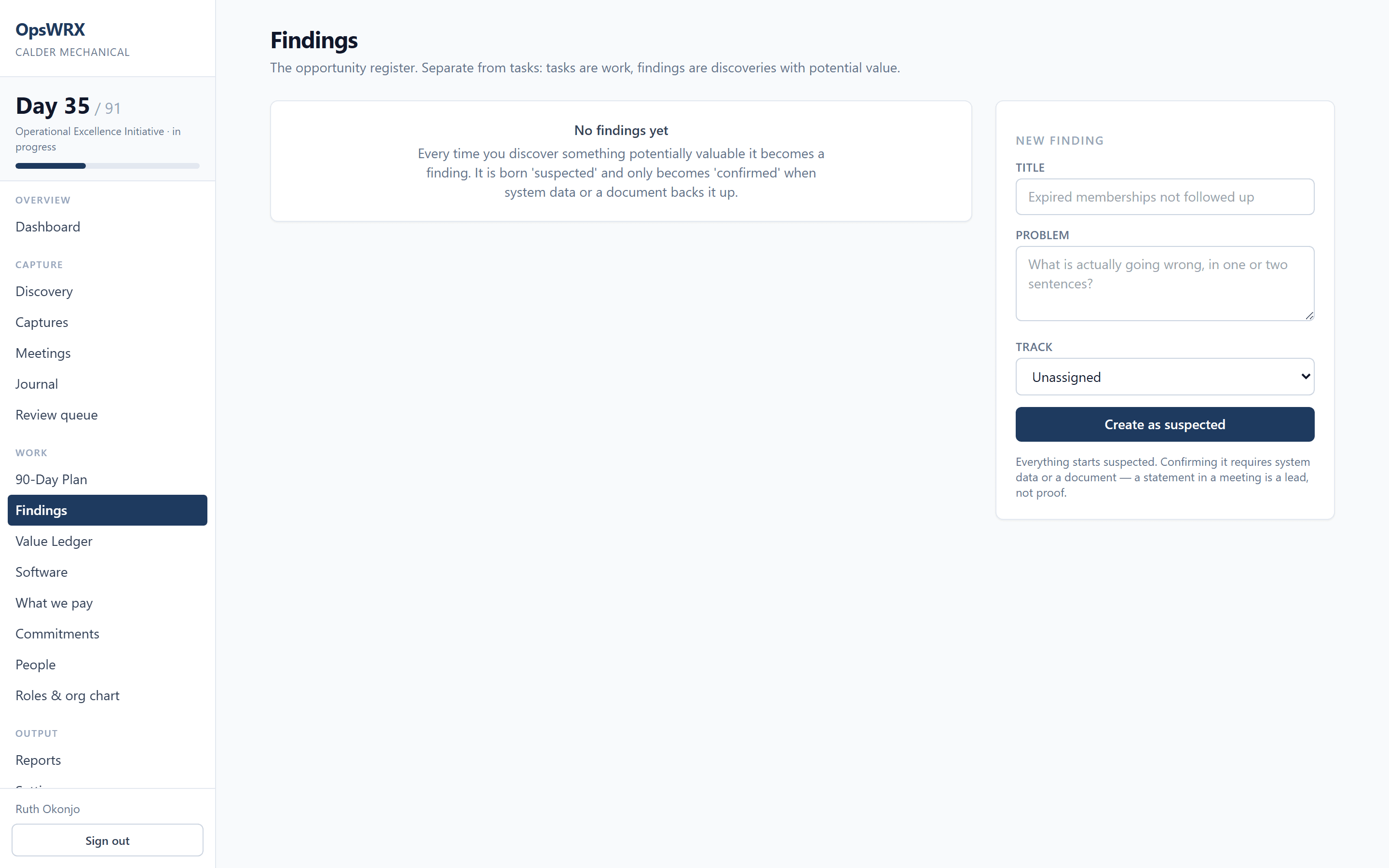
Findings that carry their evidence
A finding opens as suspected and stays that way until something confirms it. Only system data and documents can confirm one. A confident summary cannot.
Each one is classified before it is acted on, against the nine lenses. Behaviour is the last of them and never the first.
What the AI is not allowed to do
An assistant reads the recordings, drafts the answers and proposes what it found. It never decides. These are enforced in the software, not asked for in a prompt.
It cannot write to the record
Everything a machine proposes lands in a review queue. Approving it is the only door into the register, and approval never overwrites a value a person typed.
It cannot invent a quotation
A proposal whose quote is not found word for word in the source is thrown away, which costs it the whole item.
It cannot label a person
It will not conclude somebody is a behavioural problem, decide discipline, or claim an improvement has been verified. Those stay with a responsible manager.
It cannot keep what is not ours
Live data read from another system is shown and discarded. Anything that needs to persist goes through review and becomes the company’s own record, asserted by a person.