Rarely a people problem.Usually an unclear one.
OpsWRX is a 90-day programme, and the software that keeps the evidence. It finds what actually prevents good work, fixes the conditions, and shows you whether it held.
A missed result looks like somebody not trying. Underneath it is usually a handoff nobody owns, a queue that hides the oldest request, and a person without the authority to answer the question in front of them.
Until you know which of those it is, every fix is a guess. Most software skips that part and hands you a task list. This one refuses to.
It starts by listening, properly
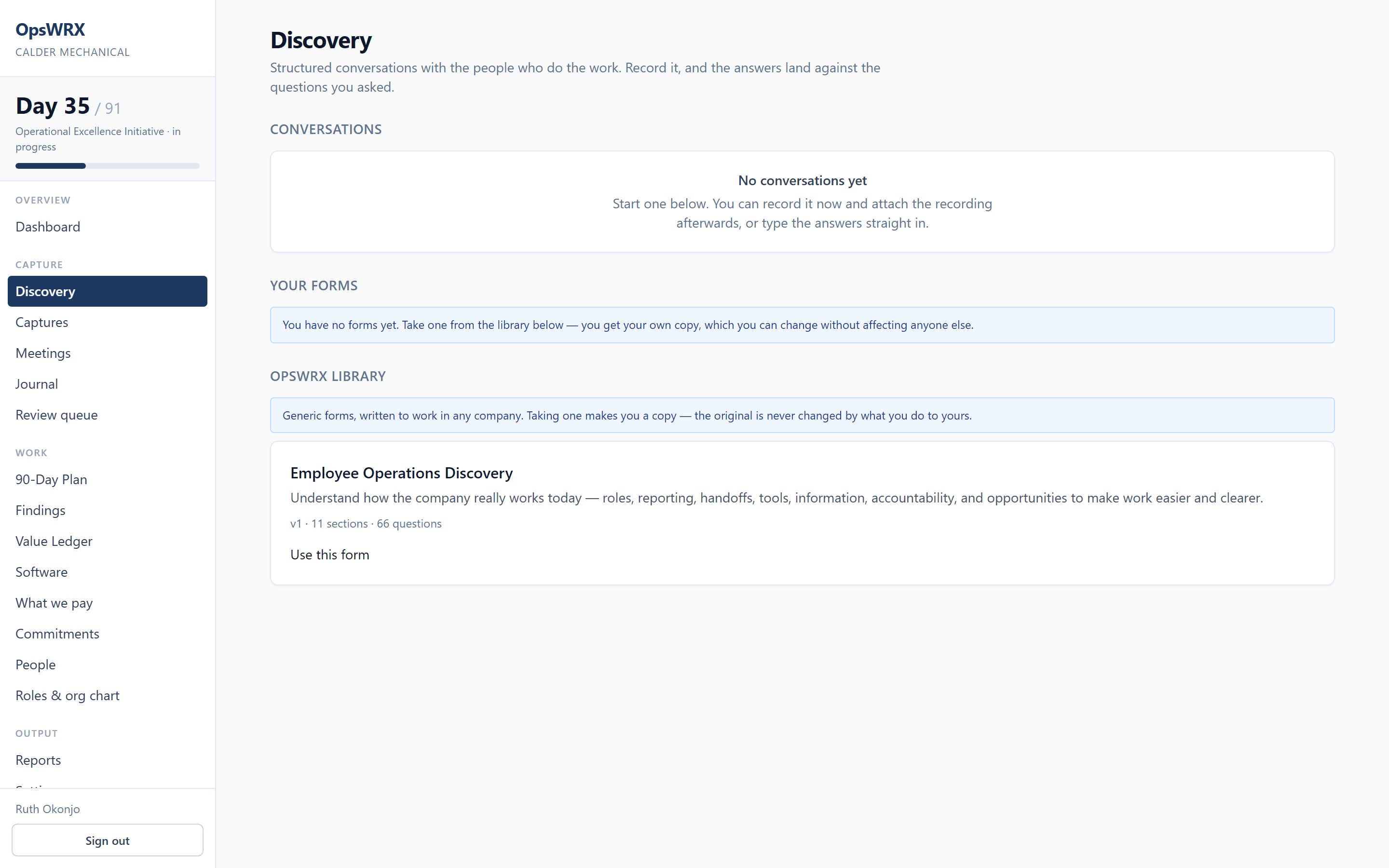
Sit down with everyone who does the work. Record it. The answers land against the questions you asked, each one carrying the words that produced it, so nothing becomes a claim you cannot trace back.
Voices are separated and recognised, so the same person is known in the next recording without being introduced again.
What the software doesThen it makes the invisible countable
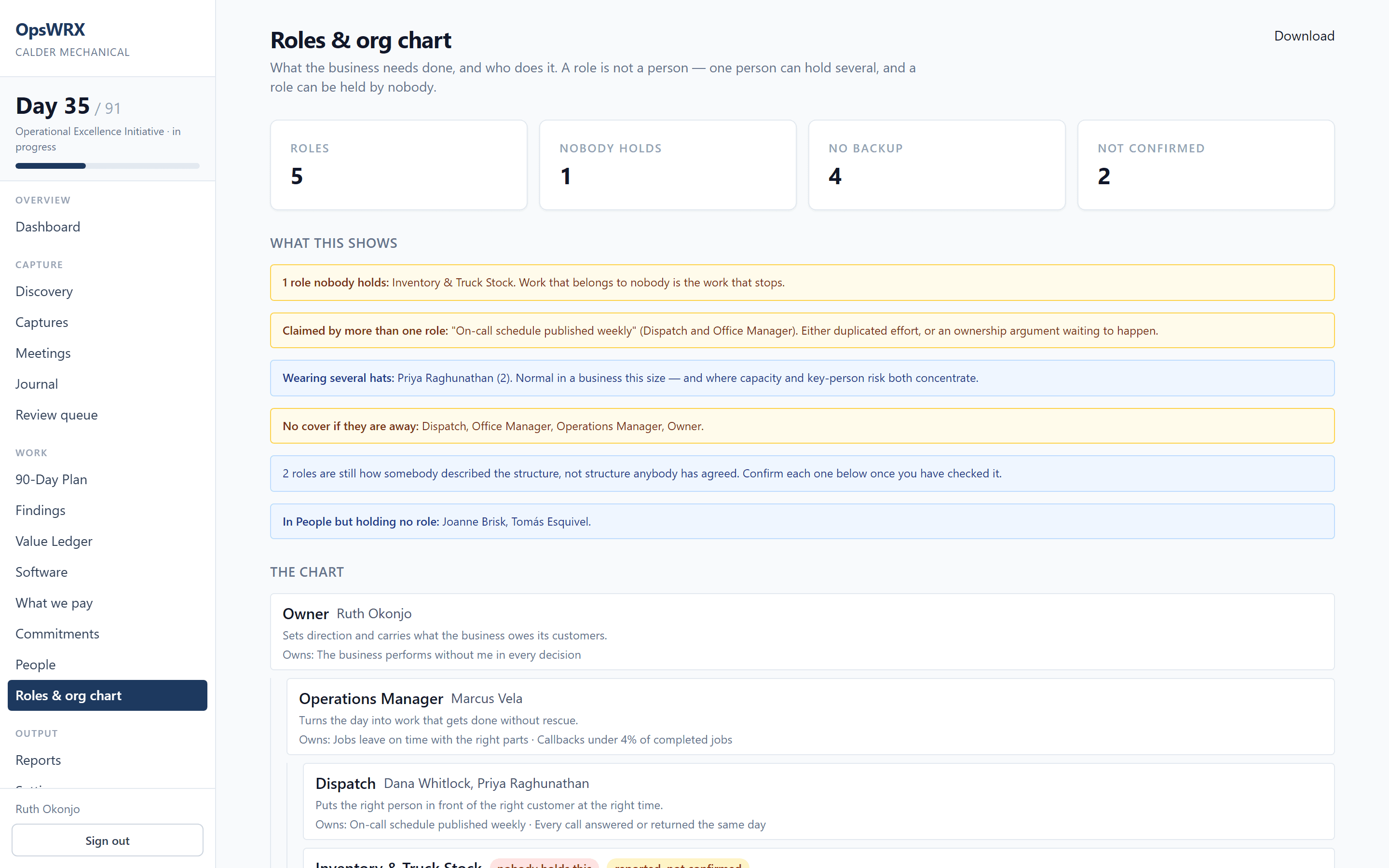
Who owns this outcome?
Roles are modelled separately from people, so one person can hold three and a role can be held by nobody. That is the only way an unowned outcome becomes visible without a reorganisation.
Nothing is asserted
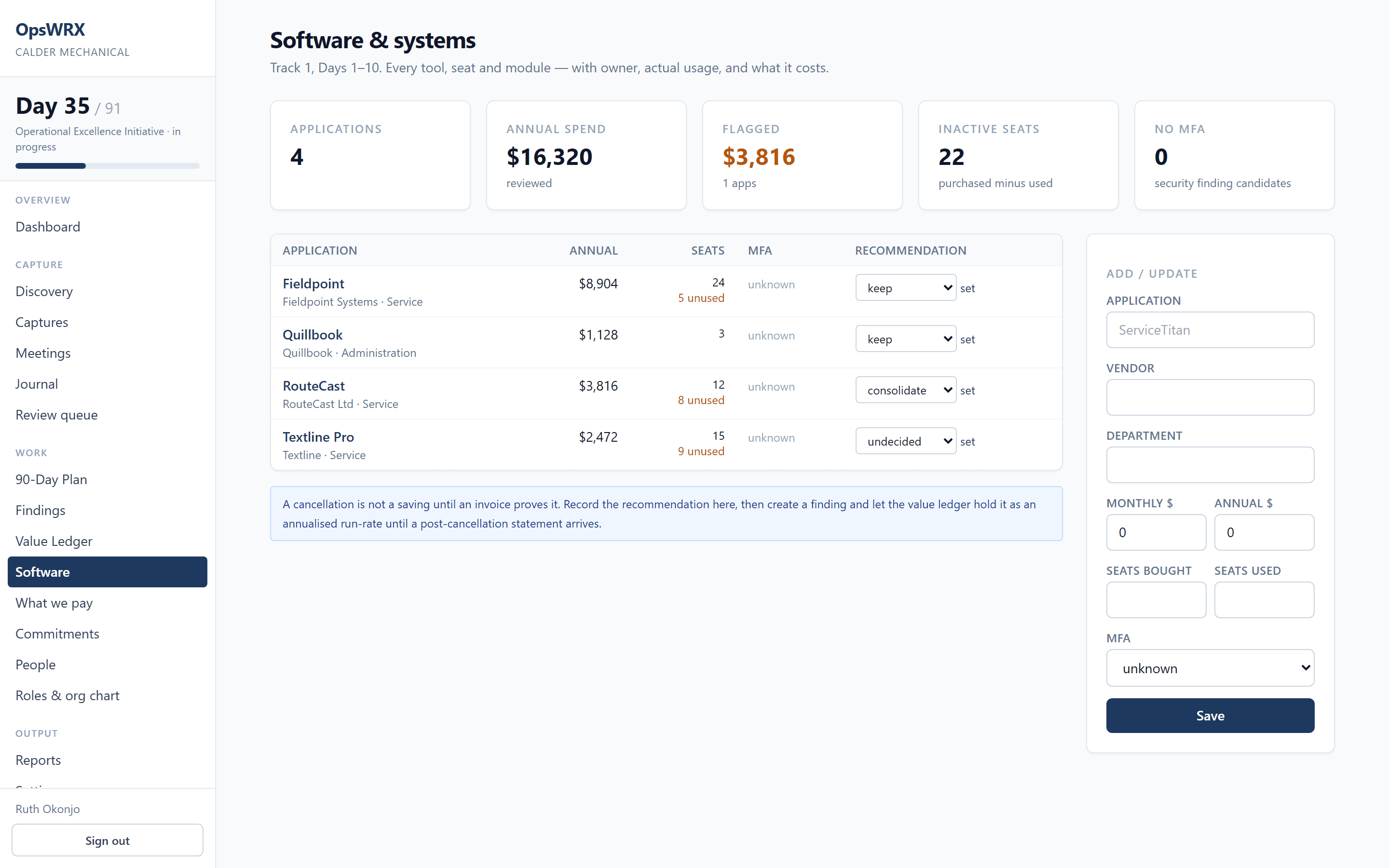
Every finding carries the passage it came from. A claim with no evidence behind it stays marked as suspected, however confident it sounds.
Money is counted once
Saving and risk reduction are different things. Only one of them is allowed to carry a number, which is why the total survives being questioned.
Ninety days, in four movements
- Days 1-30
Understand
Listen across every level. Observe the work. Establish what is actually true before changing any of it.
- Days 1-30
Diagnose
Separate a process defect from a training gap from a decision nobody is allowed to make.
- Days 31-60
Improve
Pilot the few changes worth making. One accountable owner each. Agreed checkpoints.
- Days 61-90
Verify
Test whether it holds in normal work, with the backup actually demonstrated rather than ticked.
A rhythm, not a reason to wait. Anything putting a customer or a person at risk gets stabilised immediately, and the diagnosis catches up afterwards.
Nine ways a result goes wrong
Before anything is called a people problem, it is tested against the conditions that produced it. Behaviour is the last lens, never the first, and it stays a judgement a responsible manager makes rather than one the software announces.
The test is what happens after day 90
Employees clearer and better supported. Managers more capable of leading. An owner with evidence that results improved, who has not had to take the work back. The business keeps the learning and keeps going.
Talk to us